
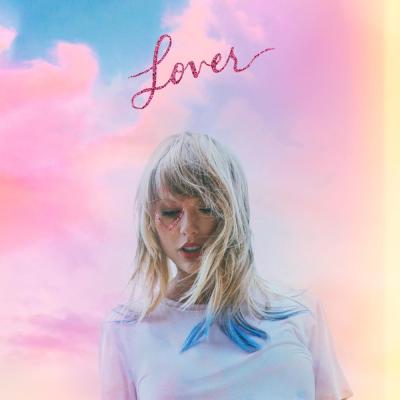
On “The Man,” Taylor Swift sings “I’m so sick of running as fast as I can / wond’ring if I’d get there quicker if I was a man.” You can harp on Taylor all you want for being rich and famous and having the gall to complain, but I think there’s something to be said for her sentiment. Our standard for male artists is often a lot lower than for female artists. The collective public foams at the mouth for Drake’s latest “playlist,” and they fail to call it out for what it is: a dumping of leftover scraps designed to grab our attention for a few moments.
Artists like Swift have to work much harder to earn our affection, and still are vulnerable to the whims of the male-dominated producing industry. Luckily, Swift has consistently demanded autonomy and freedom, and on Lover, she keeps the ball in her court. After Taylor’s record label was purchased by Scooter Braun, a record producer known well for manipulating female artists and holding their careers hostage, Swift pledged to re-record her albums in order to capture back the ownership of her work. She has since signed with Republic Records, and took on much of Lover’s production work herself.
Taylor’s music career has certainly had its ups and downs. She gained popularity with some pretty drab country songs, but her transition to pop music and the release of 1989 (still her best album, in my opinion) propelled her into superstardom and shaped her true identity as an artist. She’s had her misses; reputation was not a good album and some of her ex-boyfriend-based clapbacks were pretty tacky. But through the years, I have found her to be consistently defensible, not only in her art but her image as well.
With all that has happened, Lover represents the beginning of a new era. As the title suggests, Taylor Swift is still singing about love. However, she sounds like she’s writing the songs she wants to write, and not the songs that are just a mildly-clever hook meant to be sung by emotional teenage girls into a hairbrush after Chad wouldn’t take them to the school dance. While I do enjoy songs like “Look What You Made Me Do” and “We Are Never Getting Back Together,” Taylor has shown the ability to make more mature music, and on Lover, she delivers.
The album is over an hour long with 18 tracks, rivaling Red in its volume. What it has that Red does not is a healthy air of optimism. Even when Taylor is frustrated, her songs have plenty of bounce, and the instrumentation is bright and gentle. “I Forgot You Existed” and “The Man” both have delightfully catchy hooks and clever turns of phrase. “ME!” is definitely ridiculous overkill, but I’m pretty sure that was a promotional song for the National Spelling Bee anyway.
Because the more upbeat songs are so clean, the ballads really needed to provide an effective break; unfortunately, they don’t. The Dixie Chicks collaboration is pretty underwhelming, and “Afterglow” proves quite unmemorable. “I Think He Knows” is the real low point of the album, featuring a sub-par performance from Swift as she tries to hit a lot of notes above her range.
While Lover is a bit uneven, it’s still very easy to appreciate because it comes from a healthy place in Taylor’s mind. Swift, thrust into the limelight, has done an excellent job of avoiding any sort of PR disaster, and remains one of the most wholesome performers in an era where commercial pop and hip-hop music struggles to be wholesome. I’m not saying everything needs to be family-friendly, but I think songs that aren’t about clubbing, drugs, and sex have an easier time gaining wide appeal. Just look at “Old Town Road”; I have a hunch that part of the reason for its massive success is that everyone from 6 months to 60 years old can find something to appreciate.
Swift has also been historically apolitical. While she will make the occasional Trump complaint (which most of us can relate to), she is mostly an advocate for vague principles of peaceful coexistence. I think this works to her advantage. While it is funny to make memes about Taylor Swift’s silence regarding the latest controversy in Italian monetary policy, or write some stupid thinkpiece about how “London Boy” is an elitist bourgeoisie counterpart to Estelle’s “American Boy,” it’s also worthwhile to appreciate how bulletproof she has become because of the careful way she has shaped her image.
While Lover is not her strongest work, it is a very effective reminder of why we love Taylor Swift, or, rather, why Taylor Swift is so lovable. My biggest issue with reputation was that Taylor seemed to lose sight of what made her successful, and resorted to odd theatrics and strange beefs with Katy Perry. Now she is back in her wheelhouse, and it’s much more pleasurable for us to hear go back to the days when she was making songs like “Blank Space,” undoubtedly one of the greatest pop masterpieces of this decade.
In the future, I will continue to defend Taylor Swift with great fervor. As she moves forward with more autonomy over her career and her art, she promises to do great things, and continue to brush off the unfair criticism (some of which probably exists in this review itself) she often receives.
Ryan’s Score: 6.5
 Ryan Reviews Music